
//a paddling journey with friends on the US-Canadian Border//
“Will the campsites be obvious?” The question comes from one of the canoes at the back of our little flotilla and has been directed at me—I planned this trip. I assumed they would be, but I admit, after paddling for several hours and not seeing any, I’m not entirely sure. In the distance in every direction, boreal forest, occasionally broken by granite and sand beaches, frames the water’s edge. Beyond the treetops, rolling hills in hues of blue shape the skyline. I paddle silently, struck by the vastness and the solitude and the fact that the rocky outcrop I’ve fixed my gaze on for the past many minutes has grown no closer. My paddling is steady and rhythmic, but it appears futile. We are motionless.
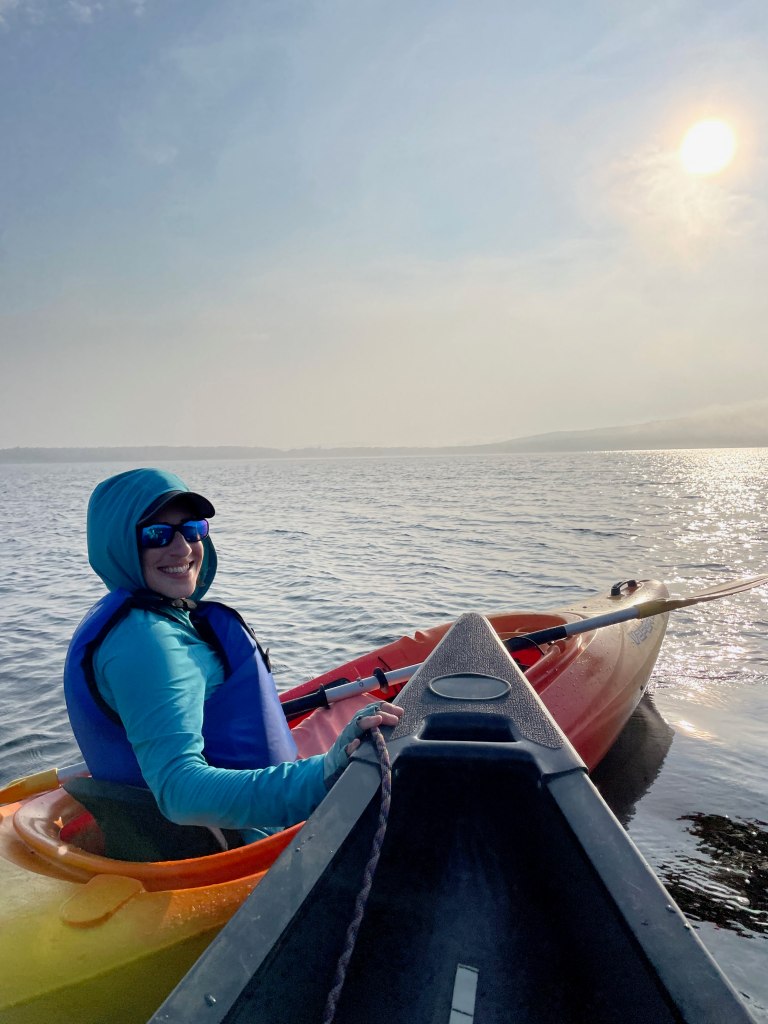
My friends and I have traveled to this eastern corner of Maine to traverse the Saint Croix River. Flowing along the US-Canadian border from the Chiputneticook Lakes to Passamaquoddy Bay, the Saint Croix features numerous class II rapids in the roughly 35-mile stretch from Vanceboro to Kellyland. To extend the trip and try something different, we put our boats in at Spednic Lake, adding about fifteen miles of wilderness lake paddling to our adventure. This stretch is beautiful, wild, quiet, and, to our surprise, a bit uncomfortable.
Mini whirlpools swirling away from our paddles and the trailing wakes of our canoes are the only disruptions on the glassy lake. As we move through the windless, cloudless afternoon, we carve a painfully slow easterly path and scan the shore with binoculars for the campsites displayed so clearly on our map – Birch Island, Cedar Point, The Ledges. None have been spotted. We aren’t lost, though. Canada is on our left, and Maine is on our right. The details will sort themselves out.
Not everyone shares this optimism, though, and as the afternoon wears on, the lake paddling portion of our adventure begins to weigh on those who long for blazed paths, swift current, and landscapes that change around every corner. Complaints are murmured, the map is scrutinized, and Google is consulted. Conversations cease, and boats spread out as we wrestle with our restlessness.
No one can abscond from a canoe trip. My partner and I paddle on. Beneath us, clear water reveals our tenuous forward motion as we slip past large boulders and schools of darting minnows. Damselflies zoom erratically just above the surface, and one comes to rest on my knee—a tiny, electric-blue traveler trusting me to carry it forward. Together, we move closer to wherever we’re going.
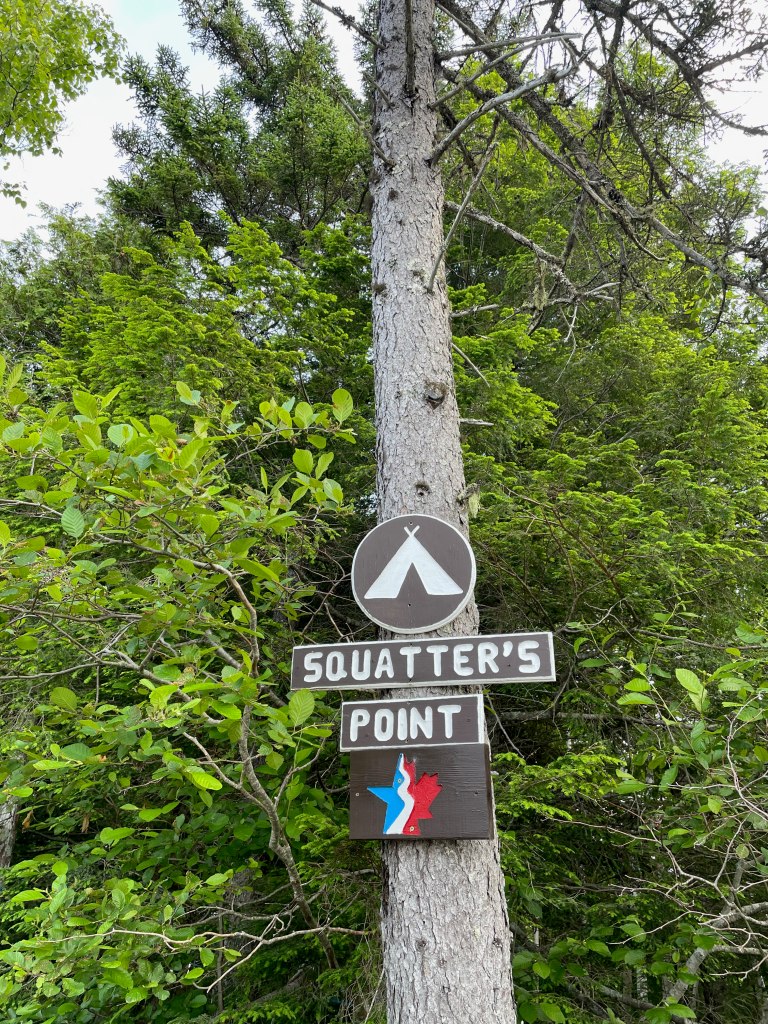
Time eeks by, the sun begins its unhurried summer descent, and somehow, we make progress. Through the lens of our binoculars, we spot a red, white, and blue Canadian maple leaf: Squatter’s Point. A collective sigh of relief ripples through our group as we pull our boats ashore, and each of us falls into the familiar routine of camp chores: pitching tents and tarps and collecting and filtering water. Comforted by this predictability – and a swim in the crystal-clear, warm water – moods improve. Today was a lesson in stillness, and as I float on my back, eyes closed against the orange glow of the sun, I practice some more. With my ears submerged, the outside world fades away as I drift in the arms of the lake.
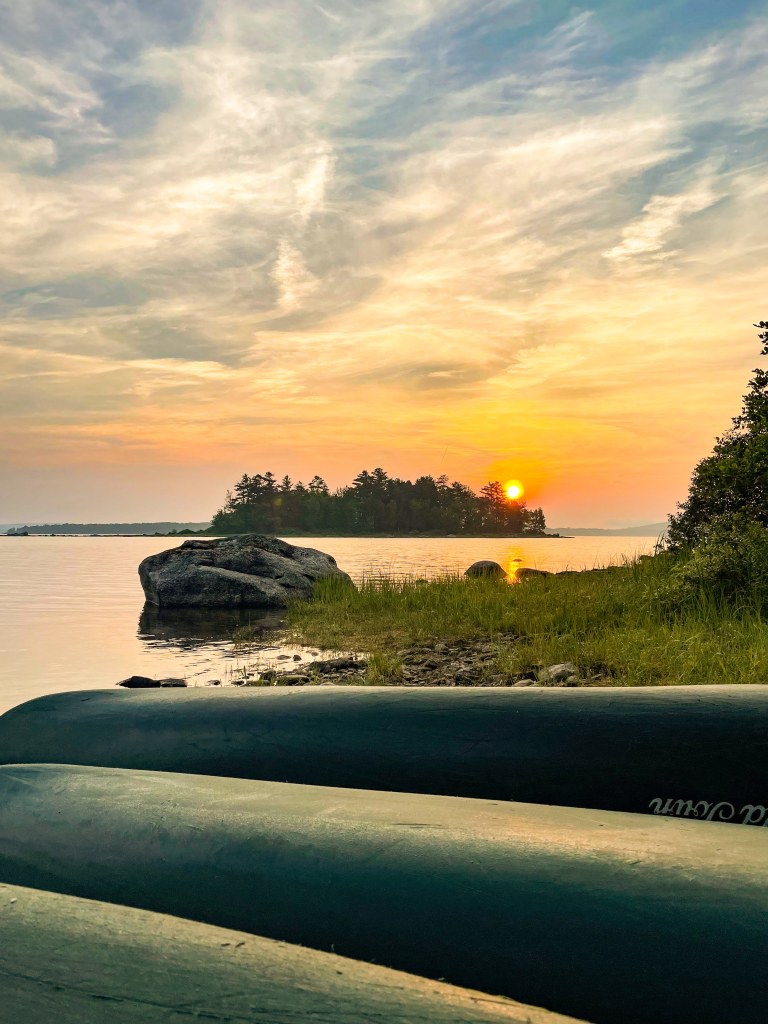
From the shore that evening, we witness a stunning sunset followed by a spectacular sunrise the next morning. In between, the haunting calls of loons and the occasional chorus of frogs punctuate our dreams.

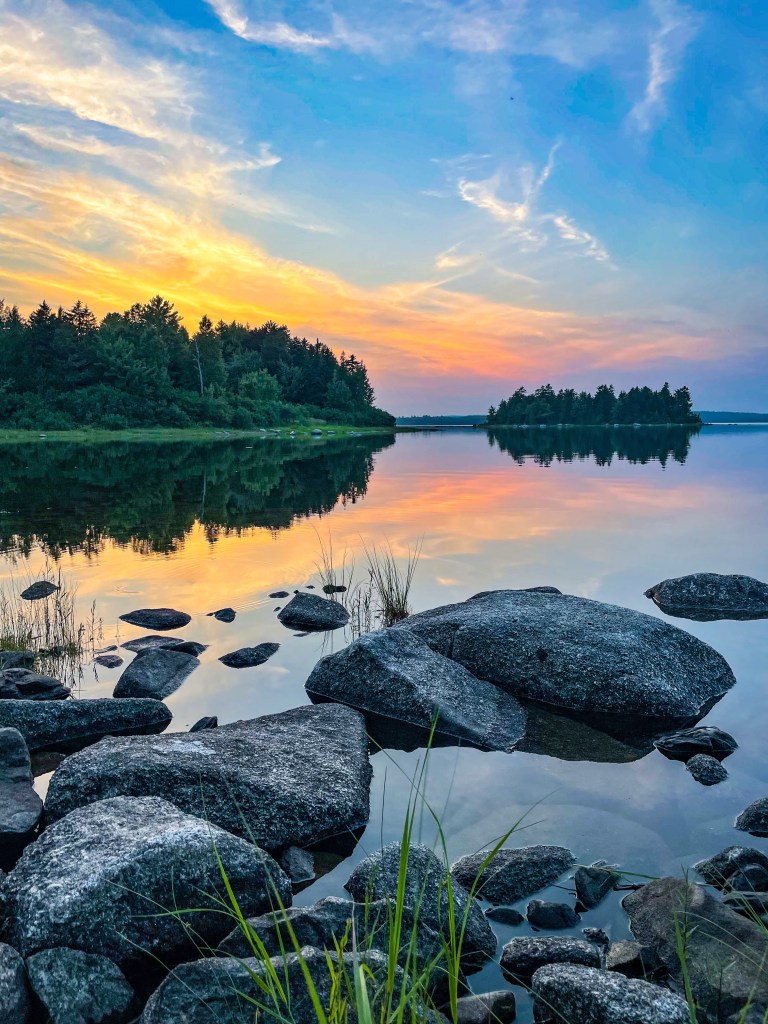
Morning light filters through a fine mist on the lake, and we all fall under her spell for the moment. We take to our unblazed path in raptured silence and follow a meandering route through the fog. As the sun moves higher and the vastness of the lake is revealed, though, the spell is broken. For some, this slow-motion travel becomes once again a chore to endure; for others, it’s a gift to lean into. In the end, we all make it to the dam for lunchtime. Now, there is a new task at hand, a more familiar one.
The river is high. It ushers us on our way through exciting rapids and straight-forward dead water, delivering us at the end of the day to a site that sits at a bend in the river and hosts a gentle current. We cool off that evening in the river as it tugs on our legs and then lie on smooth, sun-soaked rocks, indulging in a natural hot stone massage. Loons and frogs are replaced by distant coyotes that night, and the nearly full Buck Supermoon illuminates our campsite.
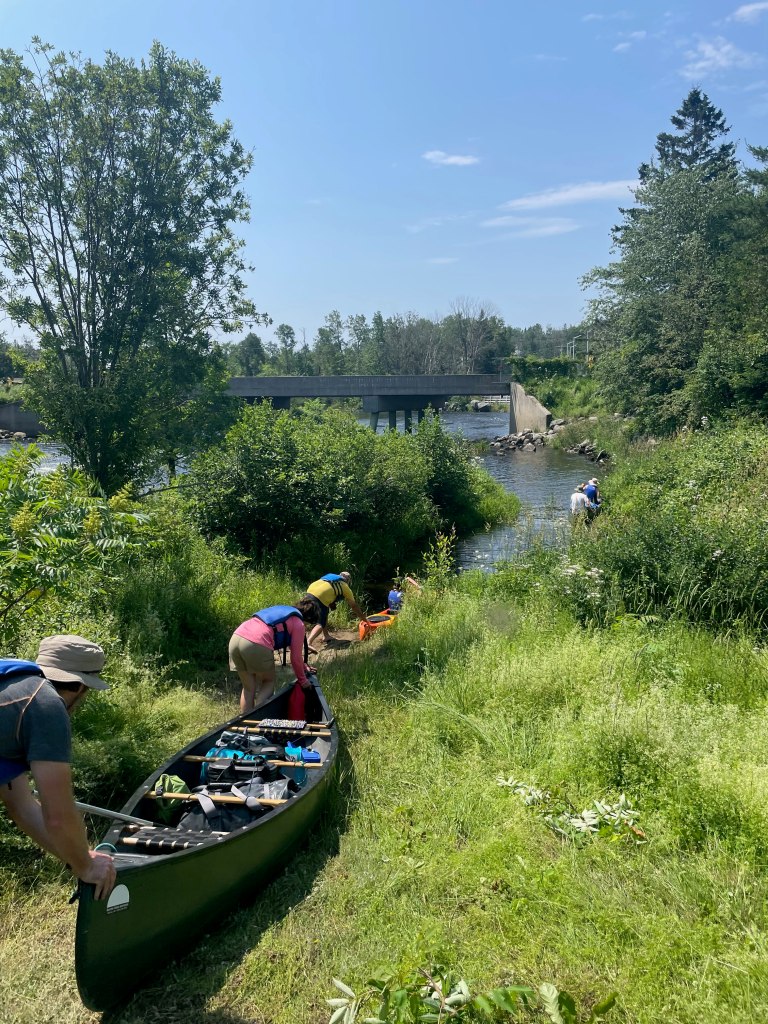
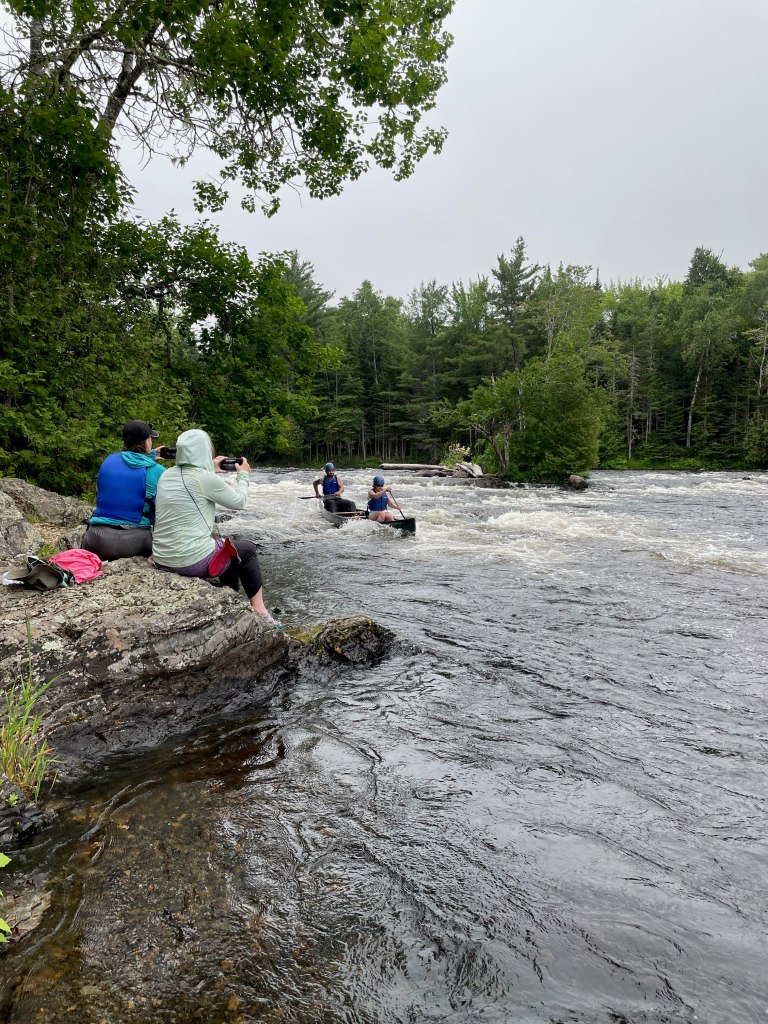
In the morning, we follow a bald eagle down the river to Little Falls and pull our boats onto the portage trail to assess our first class II+ rapids. The roaring water is intimidating, but after investigating a good line from the overlook, four of us decide to run it. The current is much faster than any we’ve ever experienced, but it’s thrilling. Once through, we wish we could do it again.
Later in the day, at the Courant Canoose Rips, the portage trail is rougher, and this time, we all decide to run the rapids rather than carry heavy canoes over land. We push away from the bank one boat at a time and quickly find ourselves in the churning current, hooting and hollering as we’re carried swiftly down the river.
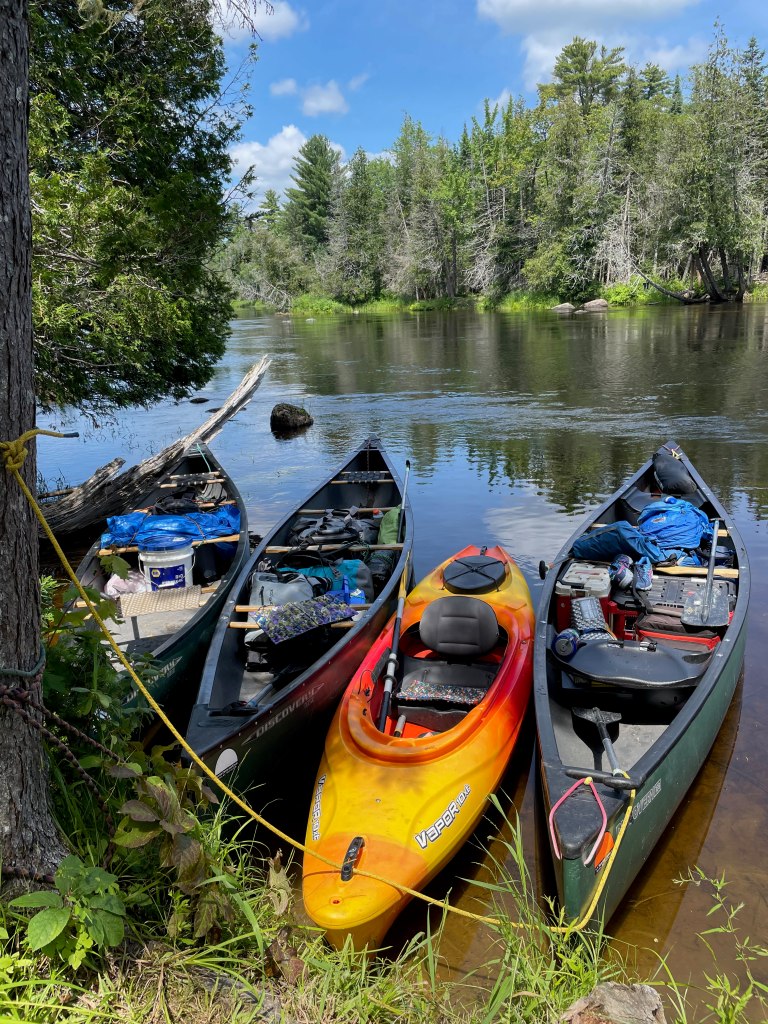
As the sun approaches the horizon, we grab the last campsite before the dam, Turtle Ledge. It’s on the left, in Canada, but it’s much like the Maine sites – a simple spot with a picnic table, flat areas for tents, an open-air privy in the woods, and an abundance of good hammock trees. We swim, eat, and rest in our hammocks as we recount the trip. Everyone agrees they’d return to the river, but not everyone feels the same about the lake. I’d do it all again. My paddling story is just beginning.
Our Itinerary:
Day 1: Forest City put-in to Squatter’s Point
Day 2: Squatter’s Point to The Cape
Day 3: The Cape to Turtle Ledge (Class II+ day)
Day 4: Turtle Ledge to Kellyland take-out
We used Sunrise Canoe and Kayak for canoe rentals and a shuttle – they were great!
 sarah hunter