
My pulk sled, laden with five days’ provisions, threatens to pull me down the hill I’ve been laboring up for the past quarter mile. I lean forward, dig in with my mountaineering snowshoes, and summon all the strength I can muster to lug this tremendous burden to the top of the hill. On level footing, I pause for a break, a sip of water, and a Reese’s peanut butter cup while I wait for my friend to join me. We exchange words of encouragement. He moves on, and I step forward, falling in line behind him and taking up the back of our nine-person team. The sled moves with me. We are one, connected by PVC poles and a belt. I channel my inner draft horse and plod on.
The beauty of the snow-globe landscape softens the hard work. Plump flakes have been tumbling down all day, piling up on the spruce and fir branches that frame our trail, on our hoods, shoulders, and eyelashes. It’s a gentle welcome, and we take it as a good omen. Since I secured our camping permit months earlier, all we could do was hope that the weather would be on our side. For now, it appears to be, but we know this can change, of course. Nearly everyone in our group has tried more than once to reach Maine’s highest peak in winter. It’s an expedition that requires training, planning, perseverance, and luck.
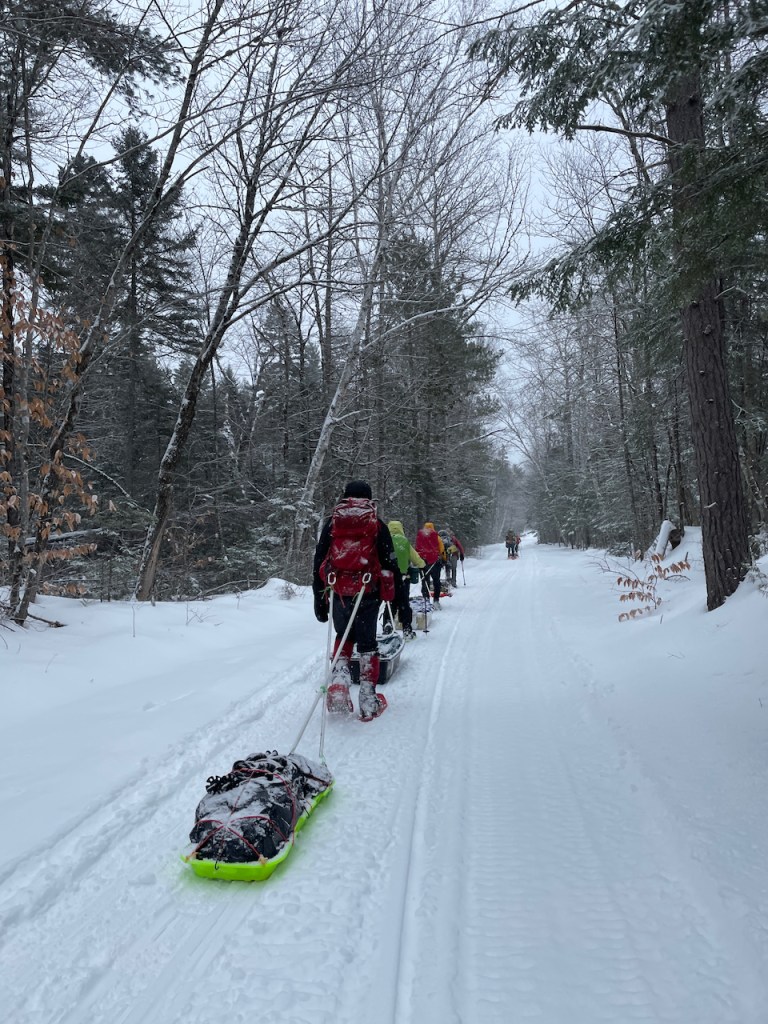
After 13 miles, we reach Roaring Brook Campground. The hut is cold, but we build a fire in the woodstove and use the hooks on the walls to string up laundry lines. Soon we’re warm and our damp clothes are drying. We dine on dehydrated meals supplemented by an array of appetizers and homemade desserts before collapsing in our bunks. Sleep comes easily that night.
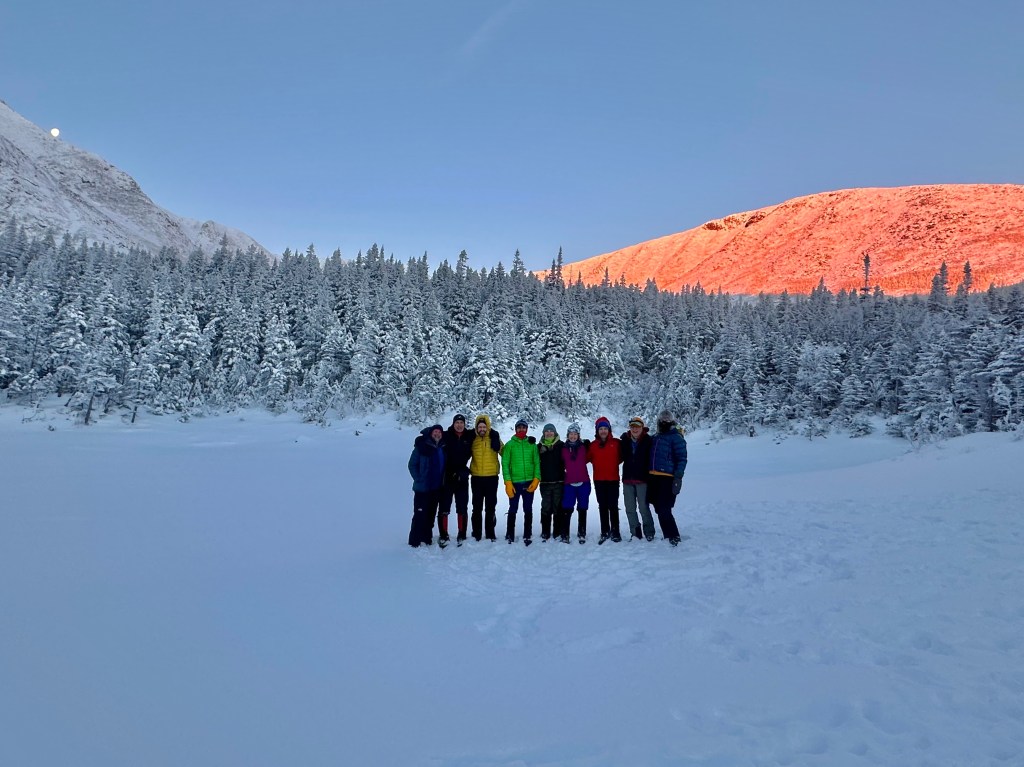
The miles are short but occasionally steep the next day, and the work is made tougher by heavy sleds and tired legs. Our reward, though, is Chimney Pond, an awe-inspiring spot surrounded by Katahdin’s towering cliffs decorated in cascades of blue-green ice. Our only neighbor is Ranger Jen, whom we greet heartily when she knocks on our door, bearing the gift of a promising next-day forecast: cloudy, 20 degrees, winds 10-15 mph. We feel good about our chances. We spend the afternoon gathering and filtering water, collecting firewood, and checking and rechecking our gear. At 4:30 the next morning, the music of alarm chimes fills the bunkhouse, and by 6:30, our headlamp beams are bobbing through the misty forest on a path toward Hamlin Ridge.
The route is steep and covered with freshly fallen snow. We take turns breaking trail, pausing now and then to keep the group together. When we reach the treeline, the mist consolidates, and a dense cloud presses around us. Our world turns white; trail-finding becomes trickier.
We move methodically, each glancing back regularly to keep an eye on the person behind us. If we all notice the thinning of the cloud at once, no one mentions it. It’s nearly imperceptible, a change that’s felt more than seen. It begins to give way, ever so slightly, to empty spaces. And then, just for a moment, it falls away completely. We stare in disbelief as Knife Edge is revealed for a moment, before the cloud presses in again, and the mountain we stand on disappears.
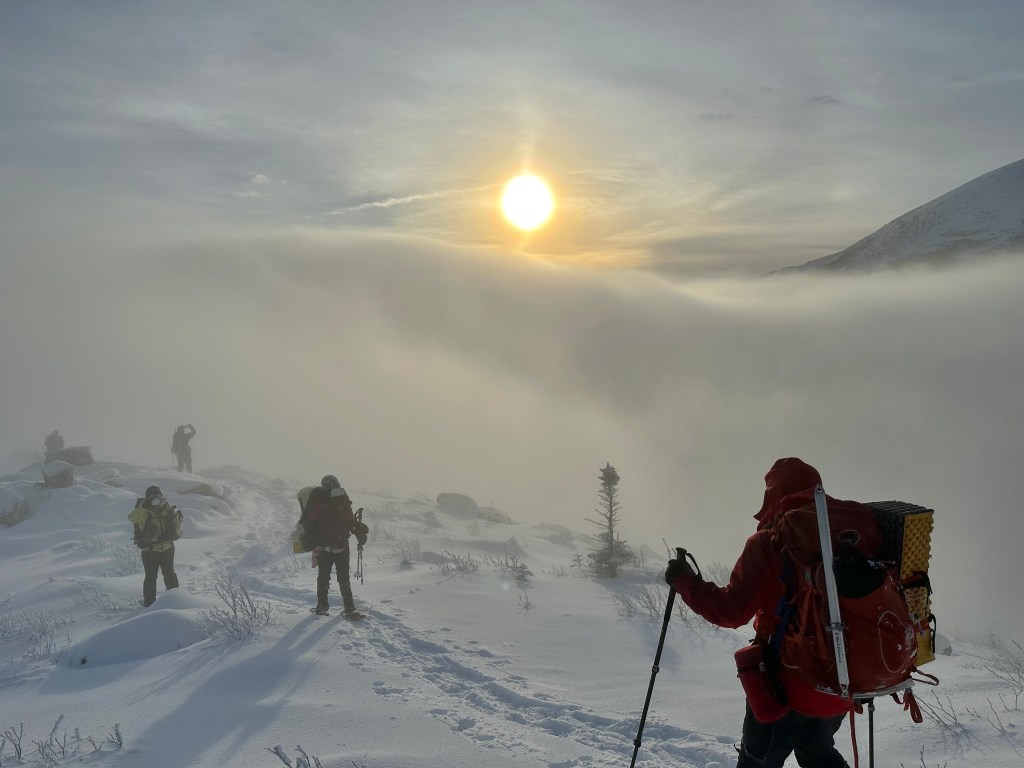
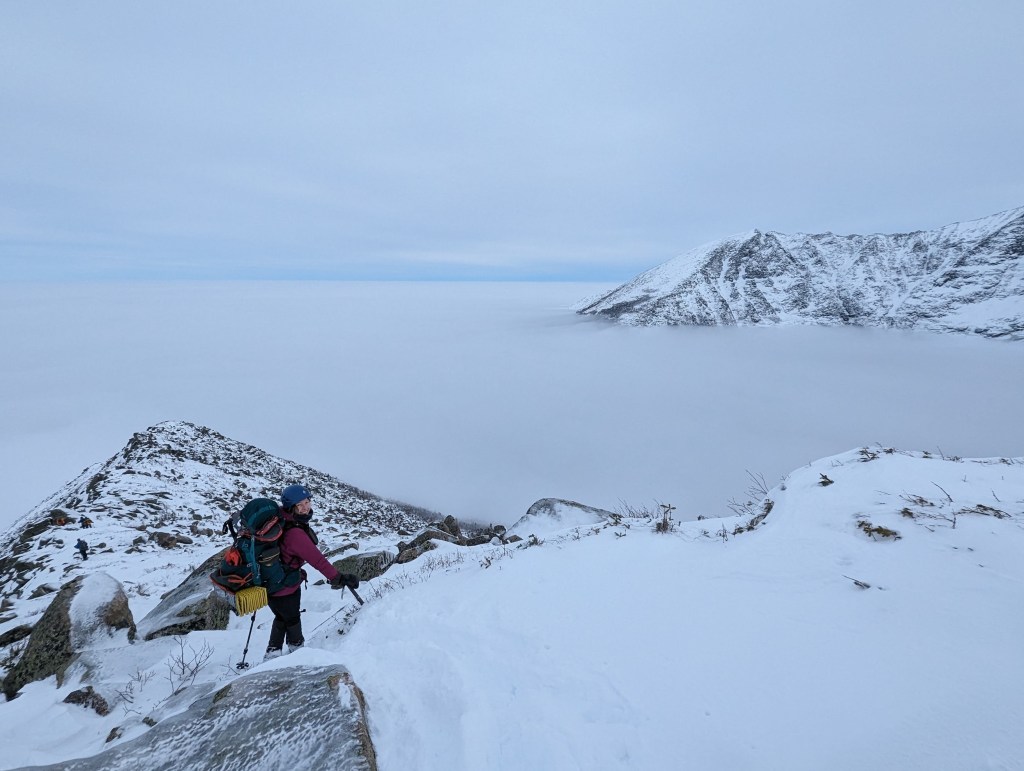
But there’s movement above us. Wisps of sunlight are filtering through. Soon, we’re enveloped in a dramatic show as the clouds dance to a silent orchestra. We stand awestruck as they swirl playfully, offering brief, veiled views of the ridges above us, then embracing us back into a world of white until, finally, the plot is revealed. The clouds sink and settle in unison, a weightless skirt on the lower half of the mountain.
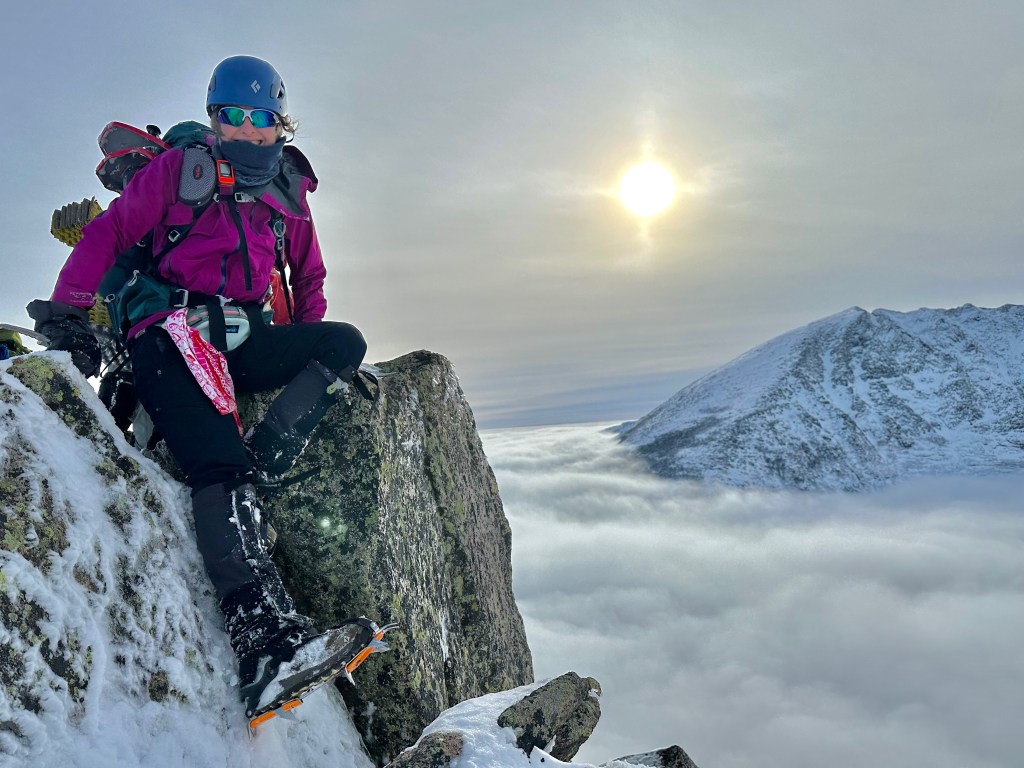
Now we can see the drops into the Great Basin to our left and the North Basin to our right. We switch from snowshoes to ten-point crampons and move on, biting into the ice as we climb the ridge. By the time we reach Hamlin Peak, we’re in a sort of collective dream. Sandwiched between an overcast above us and an undercast below us, with a thin line of blue sky at the horizon in every direction, we are travelers in another world—a frozen, windless moonscape. Our brightly colored jackets pop brilliantly against the snow-covered tableland.
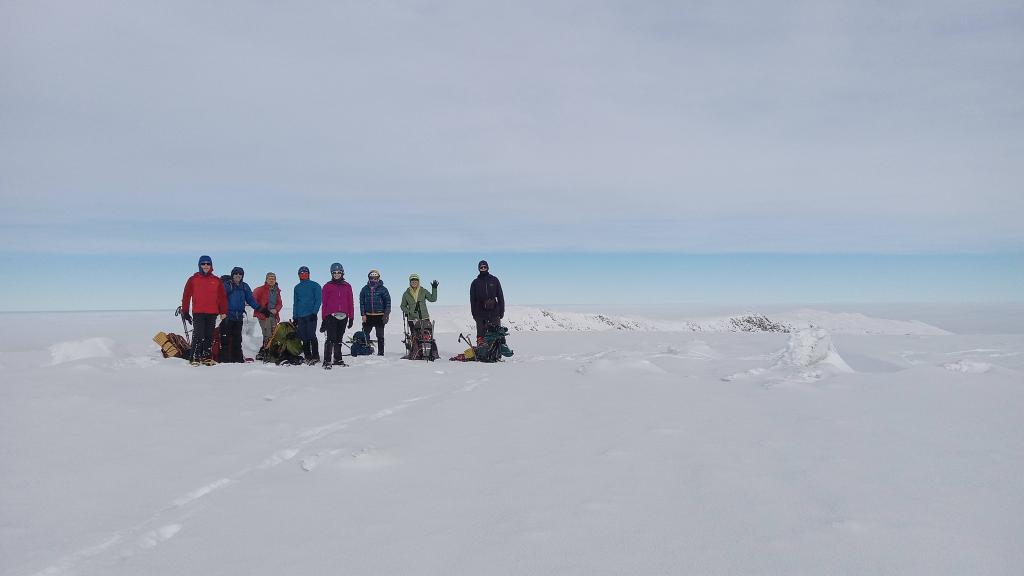
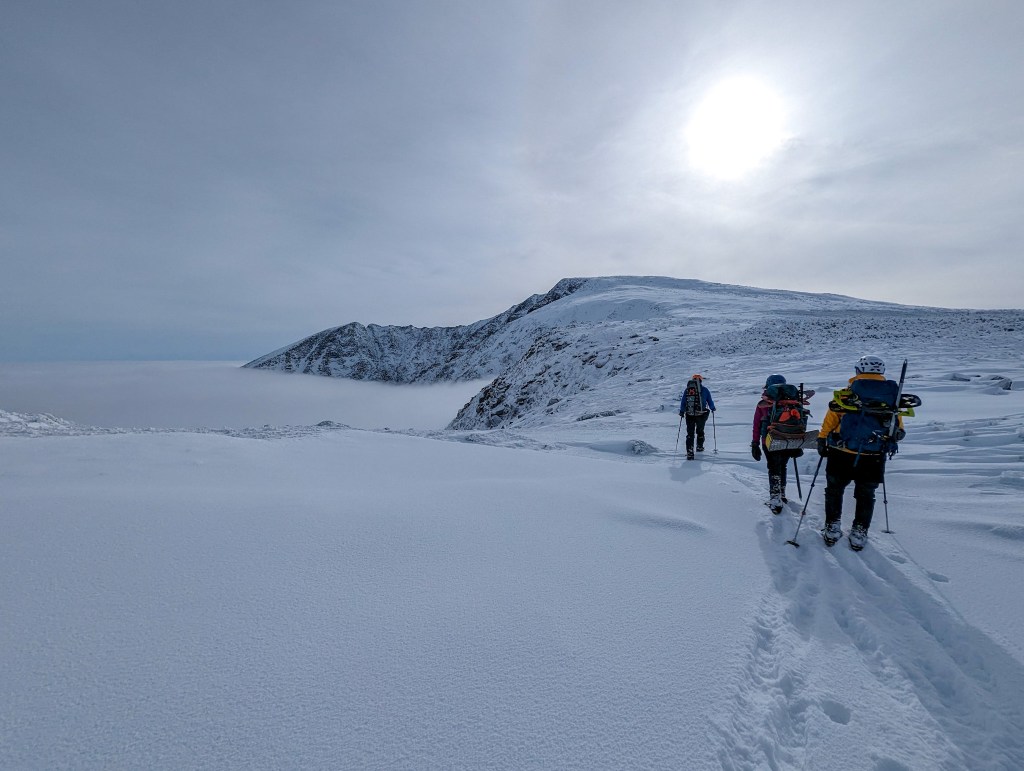
We take our time and stick together. When the snow becomes deeper between the peaks, we switch back to our snowshoes. The final climb up the Saddle Trail is steady, but by now we know we will make it, and the joy of it all masks our aches and pains. And then, the iconic Katahdin summit sign comes into view.
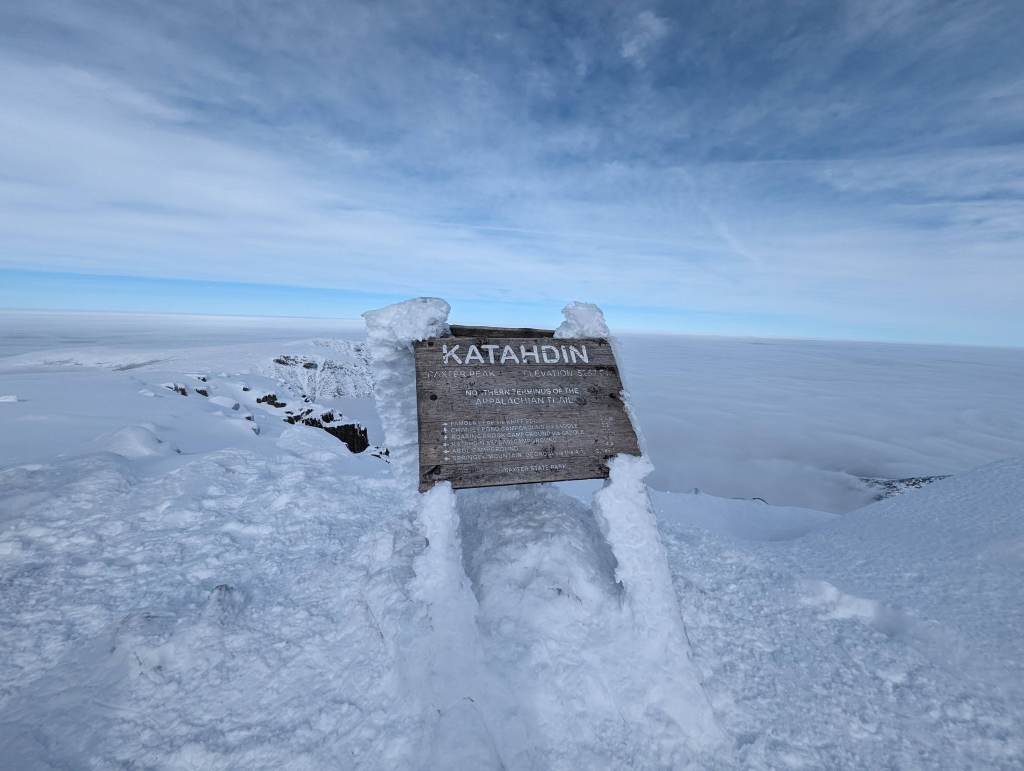
We linger at the top, take pictures, and embrace one another. We want to stay all afternoon, but this is only the midpoint of our hike. Eventually, we move away from the summit and retrace our steps, trying our best not to blink.
Back on Hamlin Ridge, we switch to crampons and move carefully down into the cloud.
This story was originally published in the February 2025 edition of The Pine Needle.
 sarah hunter